Much of the tension that arose in the northeast of Victoria came from the friction between the established and the newer social groups that were settling the region.
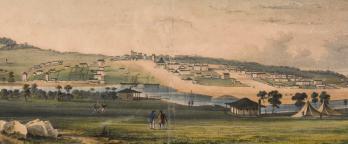
Squattersas they were called, were the original settlers of Victoria in the 1830s. The very earliest of these settled on their own initiative in the 1830s, appropriating large tracts of land for pasturing sheep or cattle.
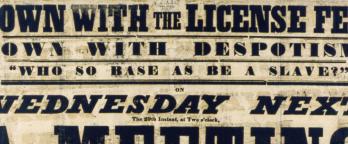
By the 1860s an independent colonial government had been established in Victoria. One of the biggest initial hurdles this government faced was regulating the disposal of the land which it nominally controlled. Various compromises were worked out with squatters that enabled the principle of government control over the initial title of land to be established while recognising the by-now immovable claims of the squatters. While squatters by virtue of their position formed part of the colonial elite, there was political tension between the squattocracy, who wanted to retain as much of their original freedom to appropriate land as possible, and the colonial government based in Melbourne.
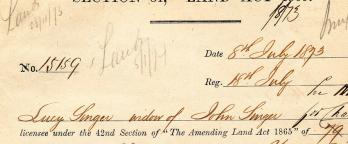
After the Gold Rush of the 1850s had ebbed a little, the Government had a new problem of satisfactorily dealing with the population influx sparked by the rush. Its general solution to the problem was the various Land Acts of the 1860s and 1870s. These were designed to settle people on the land as small farmers rather than graziers, on a European model. Essentially, those parts of regional Victoria as yet unclaimed were surveyed and parcelled up into small allotments of up to 640 acres. People applied to select an allotment that they fancied. They paid for half of the allotment on selection (at a price of £1 per acre) and paid rent on the other half for a period (mostly set at 7 years). At the end of the period, if they had paid out the balance of the purchase price of the land and had made certain improvements to it – if they had fenced it, built on it, and put at least 10 percent of it under crops – they were able to alienate the land, or secure outright possession of the title. Failure to meet the payments or conditions meant that the land was forfeited.
The life of a selector under these conditions was not easy. The scheme did not suit the Australian rural environment very well, as intensive farming was at the mercy of easily exhausted soils and a harsh climate. The selectors faced resistance and outright hostility from squatters who used their supeior economic position to manipulate the system and ensure that they retained control of the best land along the rivers and creeks.
It took the government many years to realise that the system they had set up did not work very effectively, and for conditions to improve. Meanwhile, a generation of rural selectors grew up after the gold rush with a precarious toehold in the colony’s productive life, and a history of antagonism. It is against this background that the Kelly Outbreak took place.
Sources:
John McQuilton, The Kelly Outbreak 1878 – 1880: The Geographical Dimension of Social Banditry, (Melbourne: Melbourne University Press 1979)
Michael Cannon, Ian Macfarlane (eds), Historical Records of Victoria – Volume 6: The Crown, the Land and the Squatter 1835 – 1840, (Melbourne: Melbourne University Press 1991)