Last updated:
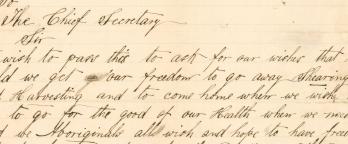
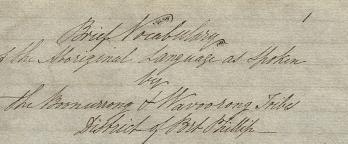
When researching our collection you may come across records with the word ‘correspondence’ in their titles. Correspondence was used a catch-all term for letters and their attachments which were sent back and forth between government departments, or that were received from or sent to people in the community.
Public Record Office Victoria (PROV) holds a vast amount of correspondence written in the nineteenth and twentieth centuries. All sorts of government departments and agencies relied on correspondence as the primary means of communications and recording decisions. Huge volumes of correspondence were accumulated by many government departments covering a wide range of subjects. Correspondence was received from members of the public, businesses or community groups, as well as from other government departments.
Correspondence often included attachments, such as related documents (for example: maps, reports, plans, other letters, newspaper clippings).
Recordkeepers in the nineteenth-century had to find a way to manage and organise the large amounts of correspondence records that they were dealing with.
One of the typical solutions they developed was to group the letters on a particular subject together. These were called correspondence files. A correspondence file on a subject could contain many letters and attachments, and could often span across many years, sometimes as much as several decades.
Researching nineteenth-century correspondence files can sometimes be challenging because accessing the right record often requires navigating a system of indexes and registers, in addition to the PROV catalogue. The video resources you can see below will help you learn about correspondence records, how they are organised, and how you can find what you are looking for within them.
At the bottom of this page you can see some guided searches for specific correspondence series that do not require the use of indexes or registers.
What do I need to know before I start?
For a general introduction about correspondence records, watch the following video first.
For a detailed explanation of nineteenth-century correspondence records and how they are organised, watch the following video which uses the example of the Chief Secretary's Correspondence records - once you learn how it is organised, you can apply the same principles to searching many other correspondence records created by other government departments that are held by PROV.
View online or at the Reading Room?
Most correspondence records are not digitised. For most of these records, researchers will need to order and view records in the PROV reading room, and the process may require multiple visits to first consult any relevant indexes and registers before being able to order the correspondence file for viewing on a subsequent visit.
Look for these icons to:

View online

Visit Us
Material in the Public Record Office Victoria archival collection contains words and descriptions that reflect attitudes and government policies at different times which may be insensitive and upsetting
Aboriginal and Torres Strait Islander Peoples should be aware the collection and website may contain images, voices and names of deceased persons.
PROV provides advice to researchers wishing to access, publish or re-use records about Aboriginal Peoples