
Last updated:

What is digitisation?

Digitisation involves the conversion of a physical or analogue record to a digital representation. Digitisation is one means of converting an original or source record and is usually carried out through scanning or photographing the source record.


Benefits and risks

Digitisation can provide considerable benefits for organisations, including:

  • Improved productivity and service delivery, as records can be accessed immediately, used by multiple people and become part of monitored workflow processes
  • Greater sharing of information and re-use of previous work
  • Better decision-making as the full set of contextual and background information can be accessed
  • Savings on storage, management and access costs
  • Preservation of the organisation’s history.

Organisations should carefully consider the intended outcomes of any potential digitisation projects for public records. Digitisation is often an expensive and resource intensive exercise. In some cases transferring records to PROV may be a more strategic action to take on permanent value, hardcopy records.

Possible risks to consider when determining whether to digitise include:

  • Increased cyber security risk, especially if the digitisation was outsourced and provided to the organisation via the cloud
  • Increased online storage costs.

Careful consideration of naming and metadata conventions is required to ensure accessibility through available search functionality.


Digitisation step-by-step

Please follow the below steps to ensure that your organisation is meeting PROV digitisation and disposal requirements.
  1. STEP 1 - Planning

    The first step for organisations is to refer to the following:


    All organisations must prepare a Digitisation Plan when the digitised copy will be used as the official record. 

    Original or source records which can be disposed of under different RDA classes do not necessarily need separate Digitisation Plans—this is only required if the digitisation process, technology or tools, or way the records are going to be managed is substantially different.


    The Plan will help your organisation:

    • Establish an authorised framework for digitisation and business ownership over the digitisation activities
    • Identify the types and condition of records to be digitised
    • Ensure they have been sentenced under an existing RDA
    • Undertake a risk analysis for the digitisation
    • Establish the digitisation process and image technical requirements
    • Determine how the digitised records will be managed
    • Determine disposal actions for the original or source records.


    PROV strongly recommends that organisations use the PROV Digitisation Plan Template.


    Image technical requirements and output formats

    The Digitisation Specification includes minimum digital image technical requirements for digitising documents and photographs. See also National Archives of Australia’s Preservation Digitisation Standards for technical requirements for other types of analogue records such as audiovisual formats.

    The Long Term Sustainable Formats Specification sets out the approved long term preservation formats for permanent records. For records which are not permanent, organisations may choose the output file, however it is recommended practice to use the approved long term preservation formats. 


    Actions:


    STEP 2 - Authorisation

    While there is no requirement to send a copy of your Digitisation Plan or other documentation to PROV upon completion, you must provide a copy of your Digitisation Plan to PROV upon request.


    Actions:

    • If requested by PROV, provide a copy of your Digitisation Plan to PROV as directed.


    STEP 3 - Disposal of source records

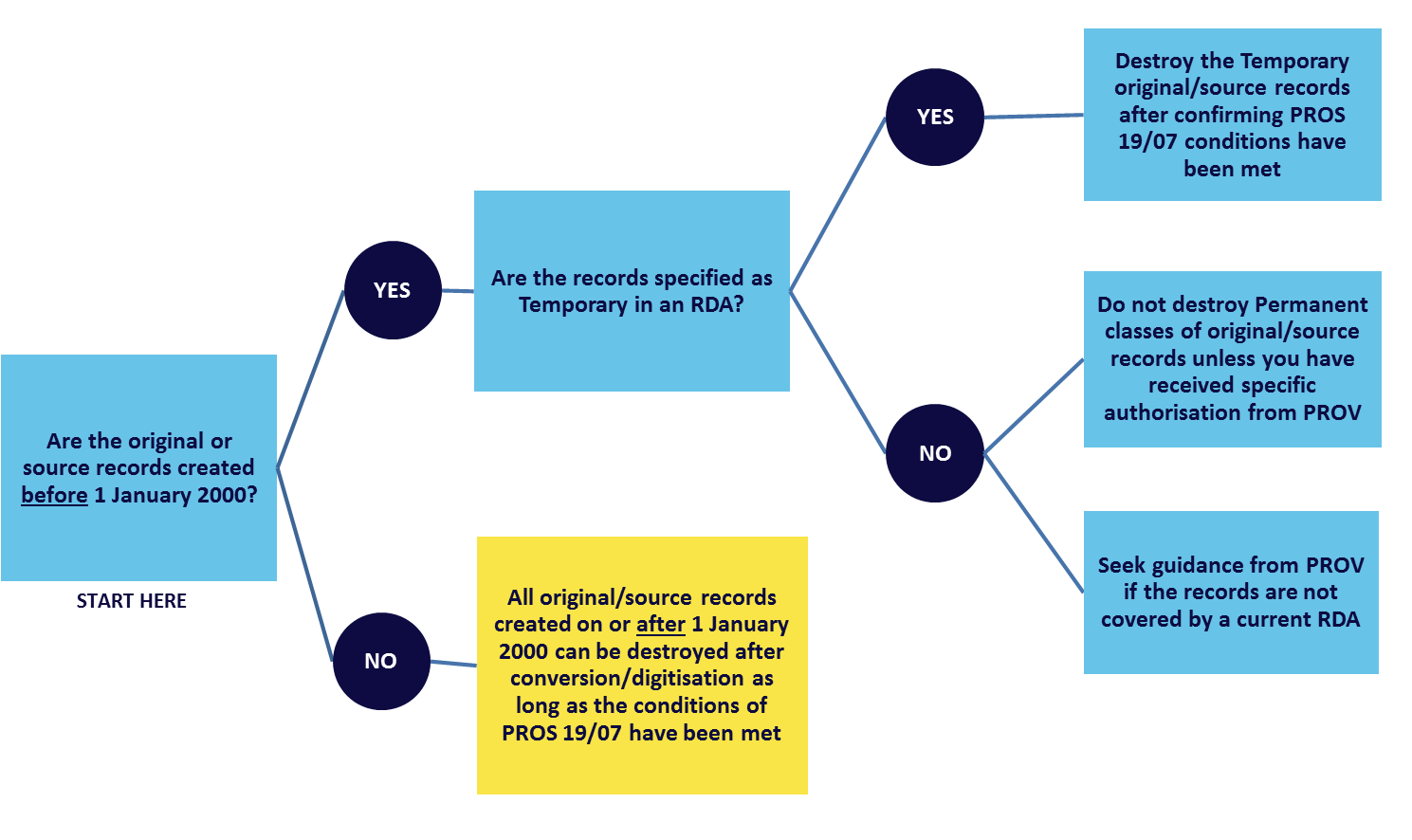
    Disposal actions will depend on when the original or source record was created. See the pathway below for further information.

    To view full-size, click on image (recommended browser: Chrome)


    Actions:

    • Refer to the classes and conditions of the Converted or Digitised Records RDA
    • Consult with PROV if you require specific authorisation to destroy certain original or source records
    • When required, PROV will determine the disposal outcome of certain original or source records.


    STEP 4 - Review and update plan

    Organisations should ensure that digitisation activities are covered by an up-to-date plan.

    Organisations must create a new Digitisation Plan for a set of records when the:

    • digitisation process, technology or tools, or way the records are going to be managed significantly change
    • existing Digitisation Plan expires.


    Actions:

    • Review, update and create new Digitisation Plans as required.

Material in the Public Record Office Victoria archival collection contains words and descriptions that reflect attitudes and government policies at different times which may be insensitive and upsetting

Aboriginal and Torres Strait Islander Peoples should be aware the collection and website may contain images, voices and names of deceased persons.

PROV provides advice to researchers wishing to access, publish or re-use records about Aboriginal Peoples