
Last updated:
Welcome to the 2026 issue of Provenance.
The history of Victoria since colonisation has been shaped by diverse waves of migration. Archival records in Public Record Office Victoria’s collection can help to illuminate these histories through the documented decisions and actions of local and state governments, including records created by and about the people tasked with implementing changing policies and priorities. Four of the five articles in this issue explore stories that reflect the varied impacts of immigration on Victoria’s communities, cities and cultures, as well as the multiple transitions that are often associated with the migrant experience.
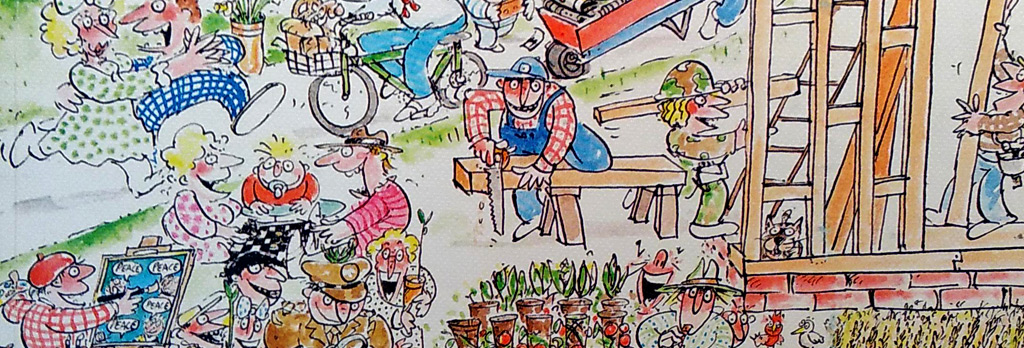
Ilona Fekete’s peer reviewed article explores the production of the All-Australian calendar, which was published in Victoria between 1980 and 1987. The result of a collaboration across government and industry, the calendar, Fekete argues, embodied a shift in political thinking and expression of the value and role of multiculturalism in Australia, from multiculturalism as an expression of cultural pluralism and ‘unity through diversity’ to a later emphasis on migrant skills and productivity within the broader national identity. These conceptual shifts and associated tensions partly emerge through correspondence files of the Ethnic Affairs Commission held in PROV’s collection. These records reflect attempts to produce a calendar that was inclusive and reflective of Victoria’s migrant cultures and ethnic identities, whilst at the same time serving as an accurate and representative management tool for the industrial workforce, and an educational resource for school students.
In their peer reviewed article, Catherine Townsend and Natica Schmeder bring us the story of Bernard Slawik, a Polish émigré architect who survived the Holocaust and sought to build a new life for himself and his family in Australia. The authors use the fictional Hungarian-American migrant architect and concentration camp survivor László Tóth, recently depicted in the 2024 film The Brutalist, as a springboard to explore Slawik’s complex experiences re-establishing his life and career in Australia after the war. This is also a story about the struggle for professional recognition in a new country, since, as with other professional bodies in postwar Australia, the Architect’s Registration Board of Victoria (ARBV) did not recognise European architectural qualifications. A wealth of information allows this story to be told, including Slawik’s application documents to the ARBV for registration as an architect, held at PROV, as well as records at the National Archives of Australia, the Australian War Memorial, private collections and overseas sources.
This issue’s third peer reviewed article, ‘Exploiting the high country: a case study of European occupation of the Omeo district’, examines the passage of successive Victorian Land Acts aimed at opening up Crown land for rural agriculture and private ownership between 1860 and 1885. These Acts had an impact on, and were influenced by, attempts to expand settlement into the isolated and mountainous high country of northern Gippsland around Omeo. Using government and local council records, parish maps and newspaper reports, Beggs-Sunter and McCoy show how Gippsland’s varied terrain and climate posed unique challenges in implementing a British agrarian ideal of settled farmers on productive farms. Significantly, legislation requiring the centralisation of Aboriginal people onto missions and reserves following the 1869 Aborigines Protection Act, operating concurrently to Victoria’s state-legislated expansion into the Omeo district, were twin factors in the formal dispossession of the traditional owners of the area, the Yaitmathang people.
Through a life story of a house in Melbourne’s central business district (CBD) during the second half of the nineteenth century, Erica Cervini tells earlier stories of immigrant history. Cervini’s article uses a range of records, including passenger lists, rate books, divorce proceedings and wills to tell the story of the owners and renters of 45 Mackenzie Street, a two-storey Victorian terrace at the northern edge of the CBD that borders onto Carlton. The owners of the house were the Moodys who emigrated from Nottingham in 1841 and amassed considerable wealth by purchasing land and building houses for rental in Melbourne. The renters of the property from the late 1880s to 1960 were the Jacobses, the author’s family, who sought a place to live among other Jewish émigrés – arriving initially from England and later Europe – that called this part of the city home. Cervini also documents the subsequent owners of the property, which eventually became the property of the Victorian Police Association in 1954 and was demolished to make way for an office building for the association during the 1960s.
The fifth article in this year’s issue tells a different kind of story, an unsolved murder case that happened in Maryvale in Victoria’s west in the 1870s and a lingering mystery that shrouded the burial location of the victims. Through a close examination of inquests and police records held at PROV and other sources including ground-penetrating radar technology, Nick Manganas has been able to retrace the likely burial location, and thereby give the family descendants some measure of closure.
We hope you enjoy reading the articles in this issue.
Tsari Anderson
Sebastian Gurciullo
Provenance editors
Material in the Public Record Office Victoria archival collection contains words and descriptions that reflect attitudes and government policies at different times which may be insensitive and upsetting
Aboriginal and Torres Strait Islander Peoples should be aware the collection and website may contain images, voices and names of deceased persons.
PROV provides advice to researchers wishing to access, publish or re-use records about Aboriginal Peoples