
Last updated:
Refereed articles
Productive multiculturalism and the All-Australian calendar
Expand Summary
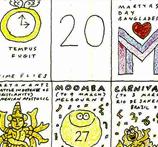
The All-Australian calendar was published in Victoria between 1980 and 1987—a literal A2-sized poster child of a failed multicultural idea. The calendar aimed to enhance the productivity of migrants and contribute to multicultural education in schools. This article explores how the idea of multiculturalism changed in the 1980s, transforming from cultural pluralism into productive multiculturalism, and how the calendar embodied this transformation.
Bernard Slawik, the real brutalist
a Holocaust survivor architect builds a new life in the New World
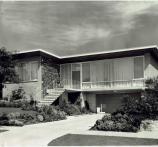
Expand SummaryPropelled by Brady Corbet’s award-winning cinematic representation of fictional Hungarian Holocaust survivor and architect László Tóth in The Brutalist, émigré architects, their architecture and migration experiences are again receiving media attention. In contrast to the superabundance of research on émigré architects who migrated prior to the outbreak of World War II, there is scant research documenting the experiences of those who survived the war years in Europe. This article discusses the phenomenon of migrant Holocaust survivor architects, in particular, Janowska concentration camp–survivor Bernard Slawik, who migrated to Melbourne, Australia, comparing his career to the fictional representation of Tóth. Slawik’s biography and career, like the fictional Tóth’s, had an epic cinematic quality and demonstrates the sheer diversity of experiences, homelands, migration journeys and architectural practice among émigré architects and their transnational stories.
Exploiting the high country
a case study of European occupation of the Omeo district
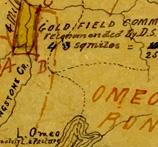
Expand SummaryThe question of land in Victoria, its availability and its value, consumed the attention of waves of British colonials from the beginning: squatters from the 1830s claimed vast tracts of land as pastoral estates for their sheep and cattle; next, miners arrived, and when their attempts to wrestle fortunes from gold proved elusive, their attention turned to the land. Their struggle to access Victoria’s Crown lands led to political contest, which led to the Land Acts of the 1860s. These Acts gradually made land available for purchase; however, the costs and conditions effectively denied access to miners and small farmers. Moreover, the acreage envisaged was based on British farming conditions and were inappropriate for the land and climate in Victoria.
The high country of northern Gippsland around Omeo, a goldmining area, was one of the last areas to be opened for selection. Examination of the Land Acts passed between 1860 and 1885 reveals how isolation, climatic conditions and the quality of the land tested the selectors and the legislation. The unexpected difficulties eventually led the government to a more realistic assessment of the land and the conditions that could be placed on selectors. Some small selectors eventually succeeded in establishing their families, but only at the expense of unsettling the original custodians of the land, the Yaitmathang people.
Forum articles
Life of a house
45 Mackenzie Street, Melbourne
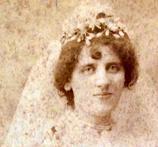
Expand SummaryThis article explores the early life of 45 Mackenzie Street, a house in Melbourne’s central business district (CBD), from the late 1860s to 1903, to tell the ‘upstairs, downstairs’ story of its owners and renters. The latter, a Jewish family who lived there for 74 years, were my family. The research and resultant story illuminates the different socio-economic and religious and cultural lives of the owners and renters, and retrieves lost stories about the CBD’s early identities and its small but vibrant Jewish population, as well stories about the CBD’s changing landscape. It also highlights the connection the renters and owners had to the CBD through living in the city.
Revisiting the ‘Maryvale murders’
a circumstantial reconstruction of a century-old burial
Expand SummaryThis article attempts to establish the likely burial location of the human remains associated with the Maryvale murders. Through archival research, local history interviews and the use of ground-penetrating radar, the likely location of a pauper grave at Edenhope cemetery is proposed as the place of burial, and the likely circumstances surrounding the burial in 1918 are reconstructed. It is my contention that the skeletal remains of Maria Cook, née Langley, and her infant daughter Louisa Jane, are buried in this pauper’s grave at Edenhope cemetery, along with the remains of a third person, a male whose identity was never established. The burial took place 34 years after the discovery of the human remains at Maryvale Station, during which time they were held at the Edenhope police station stables, seemingly forgotten. Although the murderer was never brought to trial and the identity of the male human remains continues to be a mystery, the likely resting place of the murder victims has given family descendants some solace and the opportunity to commemorate their place of burial.
Material in the Public Record Office Victoria archival collection contains words and descriptions that reflect attitudes and government policies at different times which may be insensitive and upsetting
Aboriginal and Torres Strait Islander Peoples should be aware the collection and website may contain images, voices and names of deceased persons.
PROV provides advice to researchers wishing to access, publish or re-use records about Aboriginal Peoples