

Author: Tara Oldfield
Senior Communications Advisor
Each year on 1 January, hundreds of archival records are released to the public as part of Public Record Office Victoria (PROV)’s annual Section 9 openings.
Under Section 9 of the Public Records Act 1973 (Vic), records containing personal information – such as capital case files, criminal trial briefs and divorce records – are temporarily closed to prevent the violation of privacy.
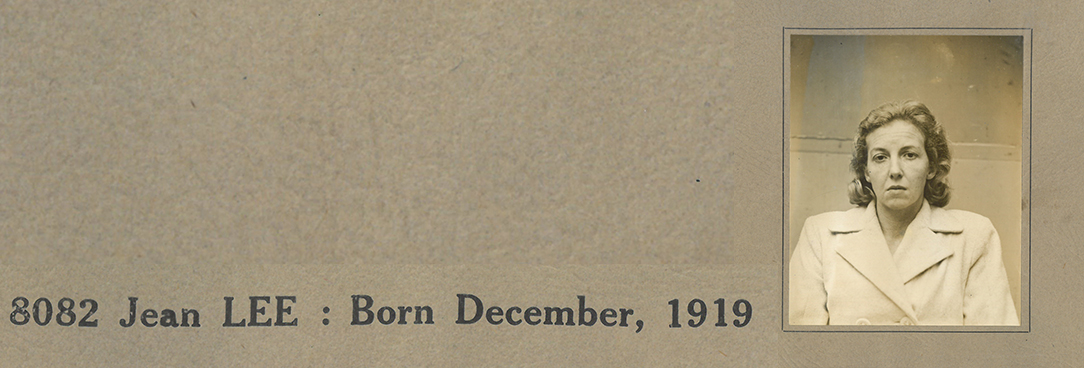
Explore the records opened under Section 9, including the capital case of Robert Clayton, Norman Andrews, and Jean Lee – the last woman hanged in Australia. Please be advised: these files contain details of theft and murder, which some readers may find distressing.
Capital case: Jean Lee, Robert Clayton and Norman Andrews
Jean Lee, Robert David Clayton and Norman Andrews met William Kent at the University Hotel on the corner of Lygon and Grattan streets, Carlton, on Monday 7 November 1949.
Lee was 29 years-old at the time, born in Dubbo, New South Wales. In Sydney, she’d worked as a milliner and factory worker, married, had a child, divorced and then met former AIF soldier Clayton. Between them they racked up 32 criminal offences. Lee was charged with soliciting, while Clayton faced charges of larceny and assault. The couple travelled to Melbourne in 1949, where they met up with Clayton’s Mildura-born army buddy Norman Andrews. He himself had 25 prior convictions, which included offences such as street betting, theft, robbery, and assault. Together they made quite a dangerous trio.

They were seated at a booth in the Ladies Lounge of the University Hotel when SP Bookmaker and Boarding House Manager William Kent, known fondly as Pop, arrived. He was a regular patron of the Hotel. Jean took notice of Kent’s roll of cash each time he paid for a drink. When he walked through the Ladies Lounge to use the male toilets, she captured him in conversation. He eventually sat down with the trio for a few drinks. A neighbour of Kent’s joined them briefly and saw Jean Lee write something on a slip of paper and pass it to Kent, who then placed it in his tobacco tin.
At six o’clock closing, Jean Lee, Robert Clayton, Norman Andrews and William Kent all left the Hotel together. The bartender noted they all seemed relatively sober, even though they were the last to leave the Hotel. They were all seen going back to Kent’s room at his boarding house for wine. The same neighbour who’d had a drink with them earlier, came in to borrow some newspaper off Kent for wrapping potatoes. He saw them all there in Kent’s room together:
“Clayton was on the left-hand side of the fireplace, Andrews was on the right-hand side, and the girl was sitting on his (Kent’s) knee. I think they were drinking wine if I remember rightly.”
Once the neighbour left the room, he heard the door being locked behind him.
Other neighbours had also seen all of them with Kent at the house. Jean, in particular, was easily recognised by bright red abrasions on her nose – the effects of medication for bronchial pneumonia, she later said. Later in the evening, neighbours heard commotion and groaning, and then saw the three crims leave Kent’s room. The neighbours, now concerned, knocked on the door and called for ‘Pop,’ but received no reply. They went to call the police, who later found poor William Kent dead.
With so many witnesses having seen the group together, it wasn’t long before police tracked the three down.
Jean was searched right away, her notepad matching the note in the victim’s tin. When their rooms were searched, police found blood-stained clothing.
The trio were separated for questioning.

Robert Clayton folded first. “Are you fair dinkum when you say the chap is dead?” he asked police.
“Yes, he was found dead in his room. He was tied up. He was badly assaulted and the room ransacked.”
“If what you say is right,” he said “I’ll tell you all I know. I am not going to take the rap for what others do. I admit now that I went there with them but I left before them…They wanted me to be in it to do Pop, but I wouldn’t…Jean came out in the yard at Pop’s place and she told me that he had a roll of notes on him, that his belly was too tight and she could not get it and if she could not get it the sweet way they were going to do him over…I came back into the room and Norman gave me the drum that he was going to do Pop but I told him I would not be in it and I left, leaving Norman and Jean in the room.”
Clayton’s story didn’t quite add up considering the police could very clearly see his hand was swollen and grazed as though he’d beaten someone. Yet, he maintained under questioning, “I am completely innocent of any attack on the old man,” placing the blame squarely on Jean and Norman’s shoulders.
Jean Lee meanwhile had been adamant that she wasn’t saying anything. That is, until she was confronted with Clayton’s statement. Lee said, with tears in her eyes:
“And they call women the weaker sex! I love Bobby and I still love him but if he wants it that way he can have it. His statement is true up to the part where he says he left on his own. When he left, Norman left with him and left me there with the old man. I sort of done my block and I hit him with a bottle and a piece of wood,” she said, showing the detectives a cut on her finger as proof.
“He fell over on the chair and then fell on the floor. I tied up his arms with a piece of sheet and then left the place,” she added. During follow up questions, Lee slipped and said “we” which the police picked up on. She then reiterated, “There was only me.”
Clayton’s statement was also shown to Norman Andrews who cried, “He is a f------ bludger. It is a bad blue and he is putting it on to me. I was there but I didn’t do him…Clayton and Jean took some money off the old man, but I wasn’t in it…I didn’t touch him.”
Police believed blood stains on Andrews’ coat, and skinned knuckles, told a different story.
In addition to the beating, the postmortem examination of Kent’s body found that he had been strangled. All three suspects were charged with murder.
The trial of The King V Jean Lee, Robert David Clayton and Norman Andrews took place over multiple days in March 1950 in the Supreme Court, before Justice Gavan Duffy and a jury of twelve.
In court, the police interviews were a cause for some concern for the Prosecution, as the defendants claimed they were coerced and should not have been shown each other’s statements. This caused quite a bit of debate but ultimately didn’t work in the defendant’s favour.
All three plead not guilty, and all took the stand. They all denied hurting Kent, claiming their previous statements were coerced. They admitted only to meeting Kent at the bar, going back to his room for wine, and then leaving him safe and sound on his verandah a short while later.
“(We said) goodnight to him and we left,” Lee said.
She accounted for the blood on their clothes as being from her nose, which started bleeding soon after leaving Kent’s room. The men’s bruised hands were from previous fights they said. The jury didn’t buy their excuses. Finding all three guilty of murder.

Jean Lee turned to the jury and pleaded:
“I didn’t do it. I didn’t do it.”
While Clayton let rip:
“You team of idiots, you. May your next feed choke you, you swine you.”
The death sentence was then given to each of them.
Clayton spat at the jury as he and his two guilty friends were led away.
A summary and observations by the Gaol Medical Officer described the three as inherently criminal, leaving no excuse for their brutal crime:
“Unlike many unfortunate criminals they all started life in good homes and were brought up by respectable law-abiding parents, and without any family history of delinquency. Each had a good training for a definite occupation in life so that there was no excuse for resorting to crime in later years.
All three must be regarded as inherently criminal and antisocial with little or no regard for the rights of others, and all seemed abandoned to a life of crime and profited nothing by their gaol experiences. All started their married life on bad footing with the result that two of them are divorced and the third separated, and all have lived promiscuously since their marriage. The climax to their life of crime was a particularly brutal murder of an old man for purely material gain – robbery of money on his person – and for which no extenuating circumstances can be found.”
They were all executed on 19 February 1951, Jean Lee the last woman to be hanged in Australia.

Closure periods under Section 9
The following is a broad guide on closure periods under Section 9 :
- Adult records: Typically closed for 75 years from the year of creation.
- Children’s records: Where children are the primary subject, records may be closed for 99 years.
- Staff or workforce-related records: May be closed for a shorter period – 30, 40, or 50 years – depending on whether the individuals concerned are likely to still be active in the workforce.
Find the full list of records opened under Section 9 of the Public Records Act 1973 (Vic) on 1 January 2026 below:
- VPRS 12740 Tramway Employees Salary History Cards, 1946-1970
- VPRS 14015 School Council Employees, 1921-1975
- VPRS 17893 Royal Park Admission and Discharge Register of Patients, 1941-1950
- VPRS 17588 Royal Womens Midwifery Student Clinical Experience Record Book, 1958-1975
- VPRS 12807 Victorian Railways Sponsored Migrants' Records, 1930-1970
- VPRS 30 Criminal Trial Briefs, 1950
- VPRS 10548 Maldon Children's Court Register, 1908-1926
- VPRS 283 Divorce Case Files Melbourne, 1950
- VPRS 526 Index to Register of Prisoners Received, 1947-1950
- VPRS 527 Country Roads Board Secretary's Letter Books, 1949-1950
- VPRS 266 Attorney-General’s Department Inward Registered Correspondence, 1950
- VPRS 264 Capital Case Files, 1950
- VPRS 1100 Capital Sentences Files, 1950
- VPRS 1752 Country Roads Board Wages Records, 1949-1950
- VPRS 3848 Alfred Hospital Master Patient Index Cards, 1949-1950
- VPRS 2555 Maintenance Orders, 1926-1929
- VPRS 7433 Post Mortem Registers, 1948-1950
- VPRS 7474 Asylum Restraint and Seclusion Registers, 1922-1950
- VPRS 7443 Mont Park Head Nurse's Daily Report Books - Female Department, 1948-1950
- VPRS 7489 Hillcrest Licensed House Asylum Records, 1940-1950
- VPRS 7538 Social Worker Histories, 1947-1950
- VPRS 3524 Criminal Trial Brief Register II, 1950
- VPRS 4527 Ward Register (known as Children's Registers 1864-1887), 1925-1926
- VPRS 9233 Tandarra School Records, 1902-1950
- VPRS 9208 Serpentine School Records, 1905-1950
- VPRS 8261 Sunbury Admission Warrants - Female Patients, 1949-1950
- VPRS 8252 Sunbury Nursing Report Books - Female Mental Hospital, 1948-1950
- VPRS 8259 Sunbury Admission Warrants - Male Patients, 1949-1950
- VPRS 7692 Kew Head Nurse's Daily Report Book - Female Wards, 1949-1950
- VPRS 7693 Kew Patient Clinical Notes, 1946-1950
- VPRS 7856 Bound Circulated Photographs and Criminal Offences of Convicted Persons, 1949-1950
- VPRS 8972 Bear’s Lagoon School Records, 1904-1950
- VPRS 8758 Brighton Children's Court Register, 1921-1926
- VPRS 8609 MMBW Historical Records Collection, 1948-1950
- VPRS 10563 Geelong Children's Court Registers, 1919-1926
- VPRS 10559 Northcote Children's Court Register, 1922-1926
- VPRS 12739 Tramway Employees Record Cards, 1969-1970
- VPRS 14351 Country Roads Board Minutes, 1975
- VPRS 13531 Accident Compensation Claim Register, 1969-1970
- VPRS 13279 Correspondence with Australian Railway Union regarding industrial issues, 1969-1970
- VPRS 9009 Calivil South School Records, 1906-1950
- VPRS 13971 Exchange Teacher Record Books, 1969-1975
- VPRS 10008 Supreme Court of Victoria Presentments, 1949-1950
- VPRS 5335 Index to Divorce Cause Books, 1950
- VPRS 5334 Divorce Cause Books, 1949-1950
- VPRS 19542 Divorce Case Files, Geelong, 1949-1950
- VPRS 19541 Divorce Case Files, Bendigo, 1948-1950
- VPRS 17020 Criminal Presentments and Final Orders Melbourne, 1949-1950
- VPRS 17792 Fairfield Admission and Discharge Register of Patients, 1925-1926
- VPRS 552 Divorce Case Files Ballarat, 1950
- VPRS 17871 Mont Park Admission and Discharge Register of Patients: Voluntary Boarders, 1950
- VPRS 17872 Mont Park Admission and Discharge Register of Patients, 1944-1950
- VPRS 17873 Mont Park Discharge Register of Patients, 1944-1950
- VPRS 17882 Admission and Discharge Register of Patients: Recommended Patients (Royal Park Receiving House, Royal Park Psychiatric Hospital), 1948-1950
- VPRS 17891 Discharge Register of Patients (Royal Park Receiving House, Royal Park Psychiatric Hospital), 1948-1950
- VPRS 18366 Asylum Medical Journals, 1946-1950
- VPRS 18967 The Amalgamated Melbourne and Essendon Hospitals Secretary's and Manager's Subject Correspondence Files, 1973-1975
- VPRS 329 Malvern Children's Court Register, 1925-1927
- VPRS 14019 Swinburne Examination Results, 1949-1950
- VPRS 7440 Kew Head Attendant's Daily Report Books - Male Department, 1949-1950
This year, for the very first time, Victorian Cabinet records closed under Section 10(1) of the Public Records Act 1973 (Vic) have also been opened. Learn more about the 2026 Cabinet record openings.
Material in the Public Record Office Victoria archival collection contains words and descriptions that reflect attitudes and government policies at different times which may be insensitive and upsetting
Aboriginal and Torres Strait Islander Peoples should be aware the collection and website may contain images, voices and names of deceased persons.
PROV provides advice to researchers wishing to access, publish or re-use records about Aboriginal Peoples