

Author: Tara Oldfield
Senior Communications Advisor
Women’s History Month is celebrated in March each year to honour the memory and achievements of women around the world, and to share their individual and collective histories – histories that were, for too long, overlooked or forgotten.
Below are ten women’s stories, told through records, podcasts and archival events. From psychics to nurses, teachers to crooks, revisit the fascinating histories of remarkable women whose lives are preserved in the archives.
Madame Brussels

Madame Brussels’ real name was Caroline. She was just 20 years old when she arrived in Melbourne, and it wasn’t long before she became a well-known name in Little Lon, an area known mostly for its brothels. A cartoon sketched in newspapers at the time portrayed her as an immoral, witch-like figure. This image became the accepted view of Madame Brussels.
“The truth, however, is quite different,” says historian and author Barbara Minchinton in the podcast, ‘They Called Her Madame B’.
Listen to 'They Called Her Madame B'.
Alice Cornwell
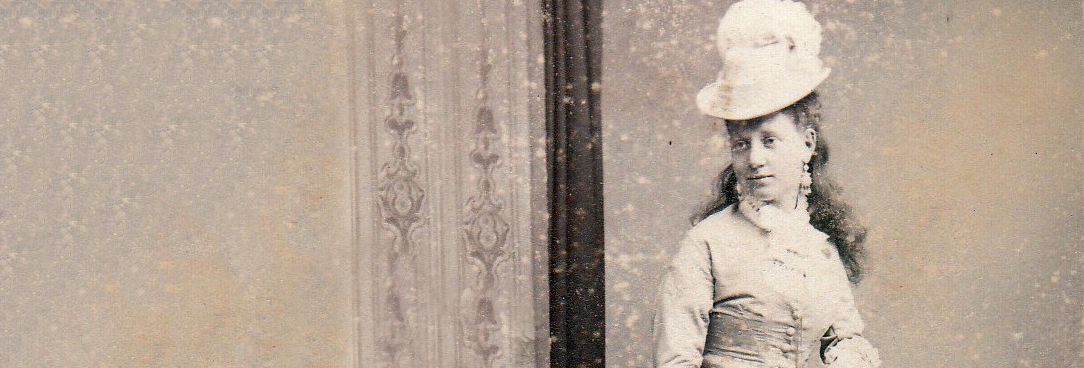
Alice Cornwell (pictured at top), famously known as Princess Midas, stood as a formidable figure in the male-dominated spheres of business and industry during the late 19th century. Her notable mining ventures in Ballarat – including the Midas Mining Company, the Speedwell and Victorian Uniting mines – marked her as a pioneering force.
Marlene Cantwell delves into Princess Midas' remarkable life and legacy.
Val Eastwood
Val Eastwood created a safe space for queer people in 1950s Melbourne with her famous Val’s Café in Swanston Street.
“It was also a really popular place for members of the theatrical community,” explains Angela Bailey from the Australian Queer Archives in the podcast ‘Queer Stories from the Archives.’ “Val often would be the cook in the kitchen. There was a piano, people would get in there and people would do a few tunes. Sometimes, depending on what was happening in the city, they’d put a lookout downstairs just to keep an eye on people who might try and come in who weren’t the right clientele or if there were police. So, she really did create a haven.”
Listen to 'Queer Stories from the Archives'.
Joan Kirner
Following John Cain Jr’s resignation in August of 1990, Joan Kirner became the first ever female Premier in Victoria. Her two years in office inspired a generation of women and reshaped the state’s political landscape.
Known for her focus on education and women’s policies, Kirner continued John Cain’s legacy of advancing equal opportunity– developing women’s health centres and screening services, establishing the Rural Women’s Network, and strengthening rape, safety and children’s services in the community.
She came into power during a turbulent time, seeking resolutions to significant financial strain through the sale of the State Bank and various other assets. Her government implemented the Docklands Authority, introduced poker machines, began discussions around building Melbourne’s casino, and oversaw the rollout of the Victorian Certificate of Education (VCE). While a government Minister, she also established Landcare.
Cabinet records from her time as Premier were opened on 1 January 2026.

Nurse Cone
In 1918, many Australian soldiers returning from WWI had to be quarantined due to the outbreak of the Spanish flu. Nurse Cone was one of a small group of military nurses who volunteered to care for soldiers at a quarantine station in Western Australia.
Of the twenty nurses who volunteered for the job, fifteen caught the Spanish flu and four died. Susie Cone captured her experiences within two tiny diaries. They were no bigger than a playing card – covering the period from 18 February 1918 to 8 July 1919.
Explore Nurse Cone's diaries online.
Jean Lee
Jean Lee is most famously known as the last woman hanged in Victoria. She was born in Dubbo, New South Wales, in 1919. In Sydney, she worked as a milliner and factory worker, married, had a child, divorced and later met former AIF soldier Robert Clayton. Between them they racked up 32 criminal offences. Lee was charged with soliciting, while Clayton faced charges of larceny and assault. In 1949, the couple travelled to Melbourne where they met up with Clayton’s Mildura-born army buddy Norman Andrews. He himself had 25 prior convictions, which included offences such as street betting, theft, robbery, and assault. Together they made quite a dangerous trio.
Jean Lee’s story is revealed through records opened 1 January 2026.

Kate Rounsefell
The deeds of Frederick Bailey Deeming have ensured his notoriety as one of the best-known serial killers in Australia’s history. The perspective of his fiancé and intended final victim, Kate Rounsefell, is told for the first time in Provenance.
As a single woman of the late 1800s, Kate felt immense pressure to marry, and succumbed to the persistent advances, and promises, of a man she barely knew. Once the truth about Deeming was revealed, Kate became the object of salacious media attention and popular fascination.
Thrust into the limelight as Deeming’s next intended victim, Kate’s actions were scrutinised minutely, and she had to fend off all manner of social stereotypes and presumptions about female propriety and conduct.
Read Kate’s fascinating story, and near miss, in Provenance.
Maree Clarke
In 2025, renowned artist Maree Clarke visited the Victorian Archives Centre for an unforgettable afternoon of storytelling, cultural revival, and creative insight. A Yorta Yorta/Wamba Wamba/Mutti Mutti/Boonwurrung woman who grew up in North West Victoria, Maree has spent more than three decades weaving together history, memory, and art into her practice. Her work is deeply rooted in research – drawing from cultural artefacts and history to reawaken cultural traditions that have long been dormant.
Discover Maree’s story and artistic legacy.

Madame Ghurka
Julia Glushkova was a Russian migrant who moved to Australia in 1917, at the end of the First World War. She was a character reader and phrenologist in Melbourne’s Eastern Arcade. Like many phrenologists, she took on a stage name: Madame Ghurka. Rumours of her background swirled around her – some she spread herself. Was she an abortionist? A spy? Her infamy reached new heights when she was linked to a murder case.
The Brookside girls
The Brookside Reformatory for Girls opened in 1887 on a farm near Cape Clear to house ‘wayward’ girls who might otherwise have gone to prison. The Reformatory was run by Elizabeth Rowe and a matron she employed. More than 250 girls were sent there during its operation. Many complained of mistreatment and even tried to escape.
Discover the stories of the women who lived at Brookside.
Material in the Public Record Office Victoria archival collection contains words and descriptions that reflect attitudes and government policies at different times which may be insensitive and upsetting
Aboriginal and Torres Strait Islander Peoples should be aware the collection and website may contain images, voices and names of deceased persons.
PROV provides advice to researchers wishing to access, publish or re-use records about Aboriginal Peoples